
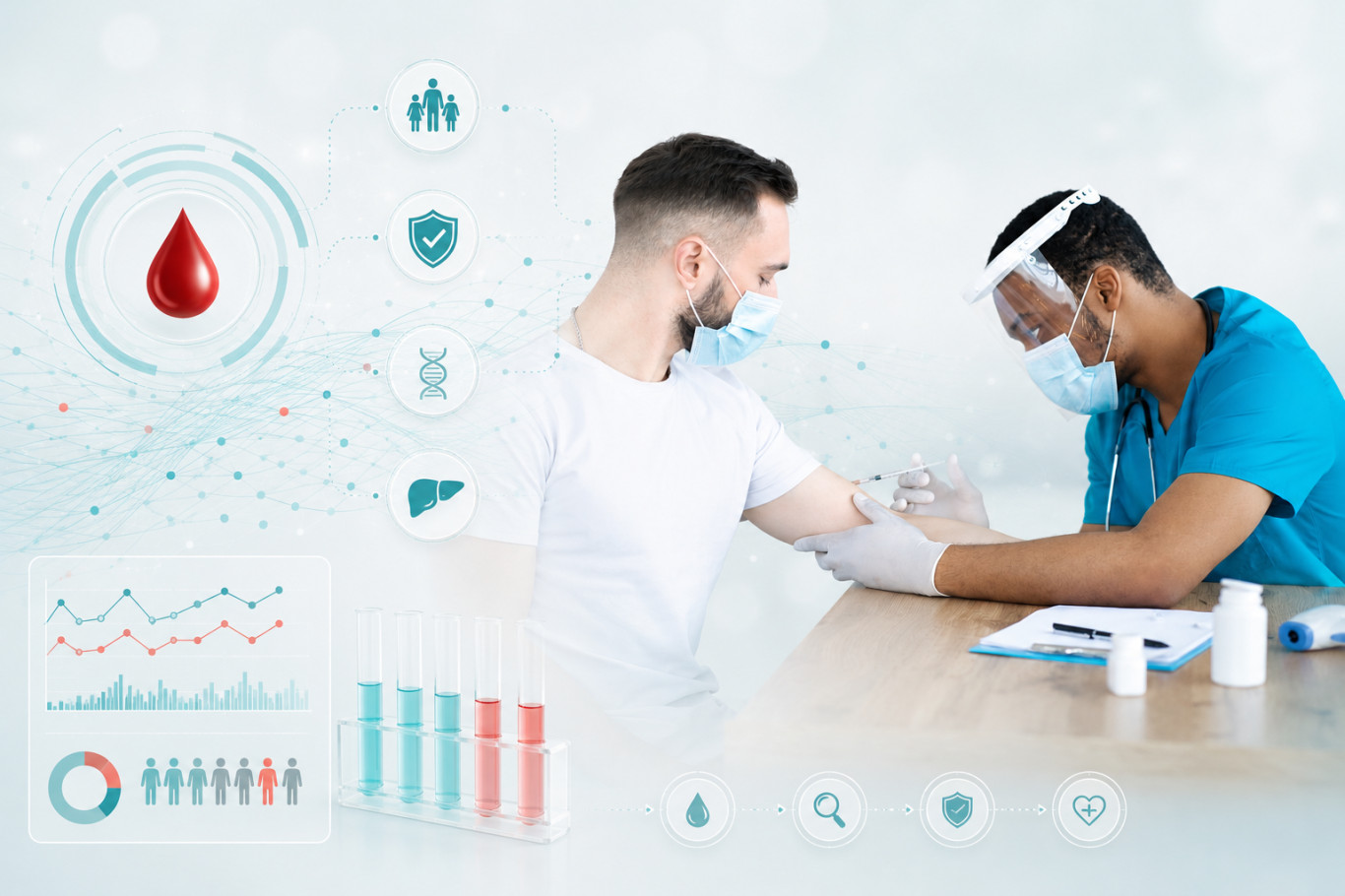
In May 2024, a 30-year-old man provided a blood sample at a SYNLAB blood collection center. A few days later, based on his laboratory results, SMART REPORT identified hereditary hemochromatosis as a diagnostic hypothesis.
Hemochromatosis is an inherited disorder of iron metabolism caused by a genetic mutation. Left untreated, it can lead to serious complications and is typically diagnosed only after the age of 40, when symptoms become more pronounced. How was it possible to suspect the disease in such a young, symptom-free patient based solely on blood test results?
The diagnostic hypothesis was generated by the Ai|Life SMART REPORT Premium risk assessment system, one of Europe's most innovative artificial intelligence-assisted healthcare software solutions.
The system compares the patient's laboratory results with hundreds of thousands of validated, anonymized laboratory records from real patients and performs statistical analyses using multiple mathematical models. DiagnostIQ Ltd., the developer of the software, validated the system using real clinical data from more than 8,000 patients in collaboration with SYNLAB Hungary Ltd., demonstrating excellent diagnostic performance.
In addition to assessing the risk of 12 major disease groups, SMART REPORT is also capable of estimating the risk of selected rare diseases and malignant conditions.
The patient had not experienced any symptoms that suggested illness. He participated in his annual blood test and chose the SMART REPORT Premium risk assessment because he considers regular health screening important and believes in the value of early disease detection.
During the SMART REPORT analysis, the patient was identified as having a high probability of hereditary hemochromatosis.
Hemochromatosis causes the body to absorb excessive amounts of iron. The excess iron is gradually deposited in various organs, where it can damage tissues over time. The disease has no characteristic early symptoms and usually causes complaints only after complications have developed, most commonly after the age of 40.
Although early signs may occur, they are generally non-specific. Symptoms such as fatigue, weakness, depression, irritability, abdominal pain, joint complaints, decreased libido, erectile dysfunction, or, in women, the absence of menstruation are often overlooked or attributed to other causes. In more advanced stages, however, the disease may lead to serious complications, including liver cirrhosis, liver cancer, enlargement of the liver and spleen, ascites, bronze discoloration of the skin, diabetes mellitus, heart failure, cardiac arrhythmias, and joint damage. Once organ damage has developed, it is irreversible in most cases.
The patient had no symptoms suggesting illness. He chose to undergo his annual blood test and requested the SMART REPORT Premium assessment because he believes that regular screening plays a key role in the prevention and early detection of disease. Thanks to this proactive decision and the SMART REPORT risk assessment, hereditary hemochromatosis could be identified before the disease had caused symptoms or irreversible organ damage.
The SMART REPORT results were delivered to the patient's email address as a password-protected PDF report. The report displays the risk assessment for the main disease groups. However, if the system identifies a potential rare disease or malignancy, this information is not automatically included in the report.
Instead, the SMART REPORT team contacts the patient directly and offers a complimentary specialist consultation to discuss the findings and determine the appropriate next steps.
The patient attended a free consultation with Dr. Biborka Nádró, one of the SMART REPORT specialists. Based on her recommendation, genetic testing was performed, which clearly confirmed the diagnosis of hereditary hemochromatosis.
The patient subsequently enrolled in follow-up care at a hospital close to his home. There, he underwent two therapeutic phlebotomy (venesection) procedures to reduce the excess iron stored in his body. No further treatment was scheduled at that time because his ferritin level—an indicator of the body's iron stores—was not yet markedly elevated.
Concerned that the treatment had not been continued, the patient contacted Dr. Nádró again.
A new SMART REPORT Premium assessment was performed, followed by another specialist consultation. With the patient's consent, Dr. Nádró arranged further care at the Department of Gastroenterology of the University of Debrecen Clinical Centre, where the necessary specialist examinations were organized.
At the clinic, the patient underwent a FibroScan® examination, a non-invasive test used to assess liver health by detecting liver fibrosis, fatty liver disease, and cirrhosis.
Fortunately, the examination showed no evidence of liver cirrhosis, confirming that the disease had not yet caused significant organ damage.
The patient made a responsible and health-conscious decision by attending his routine annual screening despite having no symptoms. He was not prompted by illness, but by the belief that regular health screening is essential for disease prevention and early detection.
The risk identified by SMART REPORT, the prompt diagnostic work-up, and the specialist-led follow-up together enabled hereditary hemochromatosis to be diagnosed at an early stage. As a result, the patient was able to avoid serious, often irreversible complications and can continue to live with a good quality of life under appropriate medical supervision.


Innovation