

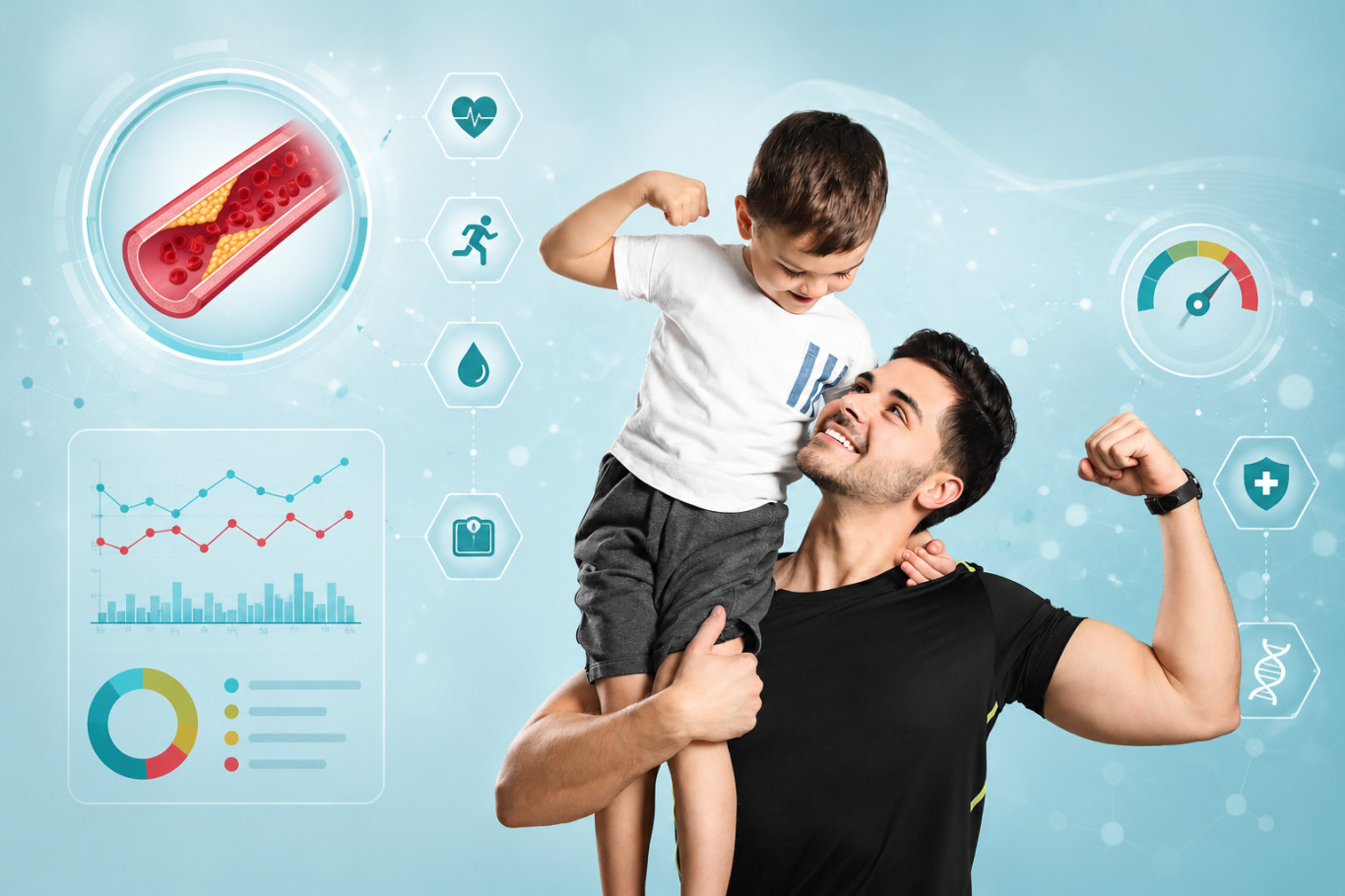
Familial hypercholesterolemia (FH) is an inherited genetic disorder that causes abnormally high levels of low-density lipoprotein (LDL), commonly known as "bad" cholesterol.
One of the greatest dangers of FH is that it may remain completely asymptomatic for many years, while persistently elevated LDL cholesterol silently accelerates the development of atherosclerosis from an early age. According to published scientific data, individuals with FH are at a significantly increased risk of developing cardiovascular complications—such as heart attack or stroke—much earlier than the general population. This is why early diagnosis and timely treatment are particularly important.
According to information published by the University of Debrecen, an estimated 30,000–40,000 people in Hungary are living with familial hypercholesterolemia, yet only 1–2% are aware that they have the condition.
The diagnostic hypothesis was generated based on the Ai|Life SMART REPORT Premium risk assessment.
The system compares the patient's laboratory results with hundreds of thousands of validated, anonymized laboratory records from real patients.
Multiple mathematical and statistical models work together in the background. Each model analyzes relationships between laboratory parameters using different approaches, and their combined results are used to estimate the probability of various diseases.
The purpose of SMART REPORT is not to establish a diagnosis, but to provide additional clinical information. The reported risk is based on how closely the patient's laboratory profile resembles that of individuals who were later diagnosed with a particular disease.
SMART REPORT has been under development for more than a decade, and its performance has been validated in a real clinical setting involving more than 8,000 patients, demonstrating excellent diagnostic accuracy. More information: [Study]
Because a potential rare disease was identified, the SMART REPORT team offered the patient a complimentary specialist consultation.
During the consultation, the specialist reviewed the laboratory results, lifestyle information, and available medical history.
Based on the specialist's evaluation, the diagnostic hypothesis suggested by SMART REPORT was considered well-founded. To reduce future cardiovascular risk, the physician recommended dietary modifications and advised considering appropriate lipid-lowering therapy.
This patient's story demonstrates that although a healthy lifestyle and regular exercise are the foundation of disease prevention, they are not always sufficient in the case of inherited disorders.
Regular laboratory tests and preventive health screenings can help identify health risks that may remain completely symptom-free for many years. Early recognition of familial hypercholesterolemia is particularly important because appropriate lifestyle measures and, when necessary, medication can significantly reduce the risk of future cardiovascular complications.
Because the patient chose to participate in preventive screening despite having no symptoms and maintaining a healthy lifestyle—and because the risk identified by SMART REPORT was followed by specialist evaluation—his inherited condition was recognized at the age of 33. As a result, he can continue his life with lifestyle recommendations, appropriate medical follow-up, and treatment tailored to his condition.
Familial hypercholesterolemia (FH) is important not only for the affected individual but also for their family. Because the condition is inherited in an autosomal dominant manner, each child of an affected parent has approximately a 50% chance of inheriting the genetic variant.
For this reason, early diagnosis in young adulthood is particularly valuable.
In this case, the patient learned about his FH before starting a family. As a result, any future children can undergo targeted screening at an early age if necessary. If a child is found to have FH, regular follow-up, lifestyle guidance, and, when appropriate, treatment can begin long before persistently elevated LDL cholesterol causes atherosclerosis or other cardiovascular complications.
Early detection therefore has the potential to improve not only the health of the affected individual but also that of future generations.

Innovation